Yeast Infection Probiotics: Do They Actually Help?
Do probiotics help with yeast infections?
Some Lactobacillus strains may help lower the risk of recurring yeast infections when used alongside standard care, but the evidence is mixed and strain-specific. Probiotics are not a treatment for an active infection. If you have symptoms, see a clinician for diagnosis and appropriate antifungal care first, then discuss whether a probiotic has any role.
- May help: a few named Lactobacillus strains show modest recurrence-prevention signals as an add-on.
- Not a cure: nothing here replaces antifungal treatment for an active infection.
- Strain matters: a benefit belongs to a specific strain and dose, not to the word “probiotic”.

Where the yeast-infection question comes from
Vaginal yeast infections are common, they are uncomfortable, and for a meaningful minority of women they keep coming back. That recurrence is what drives the search for something you can take at home to keep them away — and probiotics, sold everywhere and marketed heavily to women, are the obvious candidate. The pitch is intuitive: yeast overgrowth is partly a problem of a disturbed microbial balance, so topping up the “good” bacteria should restore order.
Intuition is not evidence, though, and the gap between the two is where most of the marketing lives. The honest answer is more interesting than either the hype (“probiotics cure yeast infections”) or the dismissal (“probiotics do nothing”). Some strains have real, if modest, data behind them for a specific job — reducing recurrence as an add-on. None of them are a substitute for actually treating an active infection. Getting those two ideas straight is the whole point of this article.
What the evidence actually shows
The strongest thing that can be said is narrow: in some trials, particular Lactobacillus strains taken alongside standard antifungal care were associated with fewer recurrences over the following weeks or months than antifungal care alone. That is a genuine finding and it is why reviewers keep the door open on probiotics as an adjunct rather than closing it entirely.
The caveats are equally real. The trials are often small. They use different strains, different doses, different delivery routes (oral versus vaginal) and different definitions of “cure” and “recurrence”, which makes them hard to pool into one clean number. When researchers do pool them, the effect tends to look modest and the certainty of the evidence is usually rated low to moderate. Publication bias — the tendency for positive results to reach print more readily than null ones — almost certainly flatters the picture too.
So the responsible summary is this: there is a plausible mechanism, there are some supportive studies, and there is nothing like the settled, replicated certainty that would let anyone promise a result. “May help some people reduce recurrence, as an add-on” is as far as the data honestly stretches.
A probiotic that helped in one trial helped as a specific strain, at a specific dose, in a specific population. That result does not transfer to a different bottle just because both labels say “Lactobacillus”.
Which strains have actually been studied for Candida
If you are going to spend money on this, spend it on something that has been looked at rather than on a generic blend. Most of the Candida-relevant research clusters around a handful of Lactobacillus species — names such as Lacticaseibacillus rhamnosus and Lactobacillus reuteri appear repeatedly, sometimes paired together, because they are the strains associated with the vaginal ecosystem and with producing the lactic acid and other compounds that make the environment less hospitable to yeast overgrowth.
The practical takeaway is the same one that applies to every probiotic claim: the evidence lives at the strain level. A label that names a genus and species and the alphanumeric strain code, and states the colony-forming units at the end of shelf life, has at least given you something you can look up. A label that says “proprietary women's blend” with no strains and no dated CFU count has given you nothing to verify, however reassuring the packaging looks.
Why probiotics are not a treatment
This is the line that matters most for safety. An active yeast infection is a condition that should be diagnosed, not guessed. Several different problems produce overlapping symptoms — itch, irritation, discharge — and they are managed very differently. Treating what you assume is yeast with a probiotic while something else is actually going on wastes time and can let a genuinely treatable problem drag on.
Antifungal medicines exist precisely because they work on the fungus directly. A probiotic does not do that job; even in the optimistic trials it is layered on top of antifungal treatment, not used instead of it. If you have symptoms now, the evidence-based first move is a clinician and a proper diagnosis. The probiotic conversation, if it happens at all, belongs afterwards and is about reducing the chance of the next episode — not clearing the current one.
The antibiotic connection
One scenario where the biology genuinely lines up is antibiotics. Broad-spectrum antibiotics do not distinguish friend from foe; they knock back the protective bacteria that normally keep yeast populations in check, and that disturbance is a recognised trigger for yeast overgrowth in some women. This is the situation where the idea of replacing lost bacteria has the most intuitive footing, and it is where a lot of the recurrence-prevention interest is focused.
Even here, the sensible approach is boring: talk to the prescriber or pharmacist about whether a probiotic is worth adding, which strain, and how to space it around the antibiotic doses so the antibiotic does not simply kill the organisms you just swallowed. We cover the timing question in more depth in the related reading below. What you should not do is treat “I took antibiotics” as a licence to skip diagnosis if symptoms appear.
How to read a women's probiotic label in ninety seconds
| What the label says | How much weight to give it |
|---|---|
| Names the genus, species, strain code and CFU at end of shelf life | Strong. You can look the strain up and check the dose. |
| Names a strain but no dated CFU count | Moderate. Real strain, unknown potency by the time you open it. |
| “Women's probiotic blend” with no strains listed | Weak. Nothing to verify against the research. |
| “Clears yeast infections” or similar cure language | A red flag. That is a claim no supplement label is entitled to make. |
Where FloraNew fits
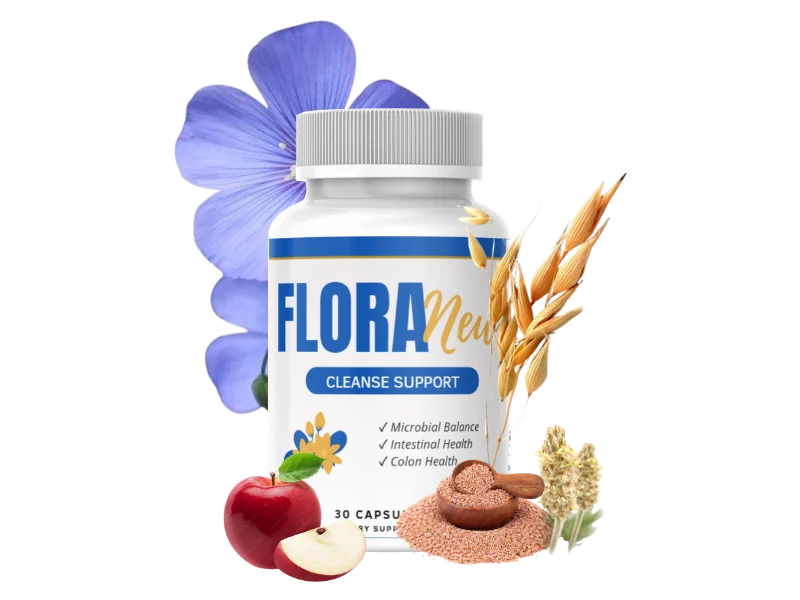
FloraNew is an oral, once-daily capsule, and its own ingredient sheets describe a soluble-fibre formula. Its FAQ separately references a probiotic blend, but does not give the genus, species, strain codes or a dated CFU count — which, by the standard set out above, is exactly the label pattern to treat as unverified. For a yeast-infection question specifically, there are two honest caveats worth stating plainly. First, this is an oral gut product, and any relevance to the vaginal environment is indirect. Second, the vaginal-health evidence that does exist belongs to named strains, and FloraNew does not name them. Read it as a fibre-forward gut capsule and the expectations are reasonable; read it as a solution for yeast infections and neither the label nor the research supports that. If you have an active infection, see a clinician — that advice does not change regardless of which supplement is in the cupboard.
See the capsule in context
FloraNew is a once-a-day delayed-release capsule. Here is the current official-store pricing and the 60-day guarantee.
Get OfferFrequently asked questions
Can probiotics prevent yeast infections?
Possibly, for some people. A handful of Lactobacillus strains have shown modest signals for reducing how often yeast infections come back when taken alongside standard care. The effect is not large, not consistent across trials, and depends heavily on the exact strain. Prevention is not the same as treatment, and results vary from person to person.
Do probiotics treat an active yeast infection?
No. Probiotics are not an antifungal medicine and should not be used in place of one. An active infection needs a proper diagnosis, because several conditions cause similar symptoms, and it is treated with antifungal therapy chosen by a clinician. Probiotics, at best, are studied as an add-on to that care, not a replacement for it.
Which strains are studied for Candida?
Most of the research clusters around Lactobacillus species such as Lacticaseibacillus rhamnosus and Lactobacillus reuteri, sometimes in combination. These are the strains most often cited in reviews looking at recurrence. Even here the evidence is mixed, and a benefit shown for one specific strain at one specific dose does not transfer to a different strain or an unnamed blend.
Can antibiotics trigger yeast overgrowth?
Yes, this is well recognised. Broad-spectrum antibiotics reduce the protective bacteria that normally keep Candida in check, which can let yeast overgrow. This is one of the more plausible scenarios for probiotics as an add-on, and it is also why spacing and timing around an antibiotic course is worth discussing with your prescriber or pharmacist.