Probiotics and Vaginal pH Balance in Women
Do probiotics help balance vaginal pH?
A healthy vaginal pH of about 3.8 to 4.5 is maintained mainly by Lactobacillus bacteria that make lactic acid. Specific oral Lactobacillus strains have shown they can reach the vaginal tract and support that acidity, though the effect is strain-specific and modest. Diet, fibre and gut balance form the supporting background, not a cure.
- Healthy range: a vaginal pH near 3.8 to 4.5 keeps the environment protectively acidic.
- The workhorses: Lactobacillus, especially L. crispatus, produce lactic acid and hydrogen peroxide.
- The disruptors: antibiotics, menstruation, semen and menopause can push pH higher.
Few numbers in women's health are as quietly important, and as widely misunderstood, as vaginal pH. It rarely gets mentioned until something feels off, yet it is running in the background every single day, set and defended by the bacteria that live there. Understanding the link between probiotics and vaginal pH balance is one of the most practical pieces of microbiome knowledge a woman can have, because it explains why the same body can feel perfectly comfortable one week and irritated the next after nothing more dramatic than a course of antibiotics or a change in cycle.
This guide walks through what a healthy vaginal pH actually is, why Lactobacillus bacteria are the heroes that keep it acidic, what everyday factors nudge it out of range, and where probiotics realistically fit. We will be honest about the limits too: pH is a signal, not a diagnosis, and no supplement on earth treats, cures or prevents an infection. What the science does support is a clearer picture of an ecosystem you can support with sensible habits.
What a healthy vaginal pH actually is
pH is simply a measure of acidity on a scale from 0 to 14, where 7 is neutral, lower numbers are more acidic and higher numbers are more alkaline. The vagina is meant to be acidic. In women of reproductive age, a healthy vaginal pH generally falls between 3.8 and 4.5 — roughly as acidic as a glass of tomato juice, and deliberately so. That acidity is not an accident or a flaw; it is a defence mechanism, an environment that most opportunistic bacteria and yeasts find genuinely hard to thrive in.
It helps to see where that sits relative to everyday references:
| Approx. pH | Reference point |
|---|---|
| 1–2 | Stomach acid, lemon juice |
| 3.8–4.5 | Healthy vaginal environment (reproductive years) |
| 4.5–5.5 | Coffee; the range where balance can start to tip |
| 7.0 | Pure water, neutral |
| 7.3–7.4 | Blood, semen — both more alkaline than the vagina |
Two details in that table matter. First, menstrual blood and semen are both close to neutral or slightly alkaline, which is why they can temporarily raise vaginal pH. Second, the protective window is narrow. A shift from 4.2 to 5.2 does not sound like much, but on a logarithmic scale it represents a meaningful change in acidity — and a meaningful change in which microbes get the upper hand. Before and after the reproductive years, in childhood and after menopause, pH naturally runs higher because estrogen, and the Lactobacillus it supports, are lower.
Why Lactobacillus is the hero of vaginal pH balance
The acidity does not maintain itself. It is manufactured, in real time, by a community dominated in most healthy women by Lactobacillus species. These bacteria feed on glycogen — a sugar deposited in the vaginal walls under the influence of estrogen — and convert it into lactic acid. That lactic acid is the single biggest reason the environment stays in the 3.8 to 4.5 range. Certain strains, notably Lactobacillus crispatus, also produce hydrogen peroxide and other compounds that further discourage unwanted overgrowth.
Not all Lactobacillus communities are equal. Researchers have described several distinct vaginal community types, and the ones dominated by L. crispatus tend to be the most stable and the most reliably acidic. Communities with less Lactobacillus, or with a more mixed cast of bacteria, tend to run at a higher pH and are more prone to swings. This is the core insight behind the whole conversation about probiotics and vaginal pH balance: the goal is not to add acid directly, but to support the bacteria that make it.
The vagina does not stay acidic because of what you put in it. It stays acidic because of who lives in it.
How probiotics support vaginal pH balance day to day
Here is where probiotics enter the story, and where honesty matters most. The best-studied vaginal-health strains — Lactobacillus rhamnosus GR-1 paired with Lactobacillus reuteri RC-14 — are precisely the kind of Lactobacillus that produce lactic acid and compete with less desirable microbes. In several trials, taking these specific strains was associated with a more Lactobacillus-dominant vaginal community. The mechanism is intuitive: reinforce the population that makes lactic acid, and you support the acidity that population is responsible for.
But two guardrails have to travel with that idea. The benefit belongs to the named strain at the tested dose, not to "probiotics" as a vague category, and being studied is never the same as being proven for you. A product that lists only a genus, or a big number with no strain code, has not earned the evidence attached to GR-1 or RC-14. The same principle governs adjacent questions — it is exactly why we cover the evidence for probiotics in UTI prevention for women strain by strain rather than as a blanket promise.
Support the gut environment your microbiome depends on
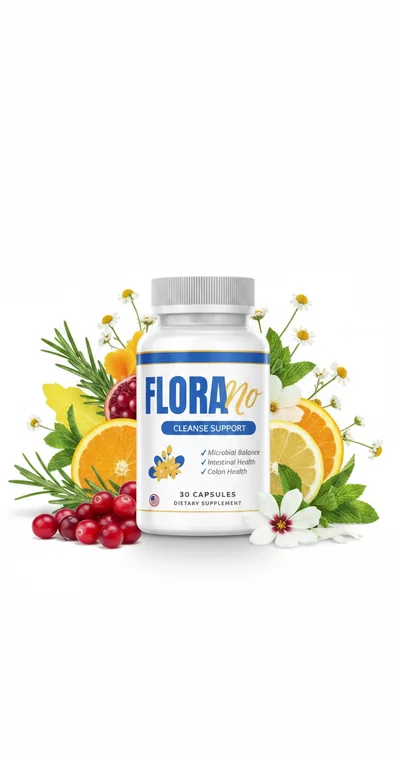
FloraNew is a once-daily, delayed-release, fibre-forward capsule. See the current official-store pricing and the 60-day money-back guarantee.
Get OfferWhat throws vaginal pH off balance
Vaginal pH is resilient, but it is not immovable. A handful of common, entirely ordinary events can push it above the protective range, usually by either introducing something alkaline or by knocking back the Lactobacillus population. The most frequent disruptors are:
- Antibiotics — broad-spectrum courses do not distinguish friend from foe and can thin out protective Lactobacillus along with their target.
- Menstruation — blood is near-neutral (about pH 7.4), so during a period pH temporarily rises.
- Semen — also alkaline, which is why pH can shift after unprotected sex.
- Douching and harsh soaps — these strip the environment and disturb the community; the vagina is self-cleaning and does not need internal washing.
- Menopause — falling estrogen means less glycogen, fewer Lactobacillus, less lactic acid, and a naturally higher resting pH.
- Hormonal shifts and stress — pregnancy, the menstrual cycle and even significant stress can move the balance.
Notice how many of these are unavoidable parts of a normal life. The point is not to fear them but to understand that the system is dynamic. When a disruptor passes, a healthy Lactobacillus-rich community usually re-establishes acidity on its own. Supporting overall gut and dietary balance — the same fibre-rich, plant-forward habits that support the microbiome everywhere — is a reasonable background strategy for making that recovery easier. It is also why the story overlaps with topics like whether probiotics genuinely help with recurrent yeast infections, where the same disruptors keep appearing.
Objection: "It is just a pill I swallow — how can it reach the vaginal microbiome?"
This is the most reasonable skepticism about oral probiotics for vaginal pH, and it deserves a straight answer. The gut and the vaginal tract are separate environments, and it is fair to ask how a capsule in the stomach could matter three feet away. The research on GR-1 and RC-14 suggests a plausible route: some strains survive digestion, transit the gut, and can subsequently be detected in the vaginal tract, likely via the short anatomical distance between the two areas. Trials have reported measurable shifts in vaginal microbiota after oral dosing.
That said, the honest framing is "indirect." An oral capsule is not the same as a targeted vaginal product, the effect size is modest, and it is strain-dependent. Anyone promising that swallowing any probiotic will reliably "fix" vaginal pH is overselling. The realistic expectation is support for the broader microbial terrain, not a guaranteed local result.

Myth: "Any probiotic on the shelf will balance my pH"
This myth costs women money and confidence. A tub labelled "50 billion, 12 strains" looks authoritative, but if none of those strains are the ones studied for vaginal health — or if they are named only by genus — the number tells you nothing about pH. Vaginal-health evidence is strain-specific to an almost frustrating degree: a benefit shown for L. rhamnosus GR-1 does not transfer to a different L. rhamnosus, let alone to a random blend. The lesson is not "spend more"; it is "read the label for strain codes and dose, and be skeptical of anything that hides them." That is also the honest answer to the category sold under a shorter name: what a pH balance pill for women actually contains is a Lactobacillus probiotic with a friendlier label, not a chemical reset. Prebiotic fibre plays a complementary role here, feeding whatever beneficial bacteria are present, and the trade-offs between the two are worth understanding through the lens of how gut bacteria recycle estrogen and shape hormone balance.
Where FloraNew fits — and where it does not
FloraNew is an oral, once-daily, delayed-release capsule, and its own published ingredient sheets describe a soluble-fibre formula built around inputs such as oat bran and apple pectin. That makes it a prebiotic-leaning, fibre-first product: its honest role is to feed the microbial community you already have, which is a low-drama, sensible way to support diversity. Its FAQ separately references a probiotic blend, but it does not name the genus, species, strain codes or a dated CFU count — which, by the standard this article sets out, is exactly the pattern to treat as unverified rather than as evidence for GR-1, RC-14 or crispatus specifically.
For a vaginal pH question in particular, two caveats belong in plain sight. First, this is an oral gut product, so any relevance to the vaginal environment is indirect. Second, the vaginal-health evidence that exists belongs to named strains, and FloraNew does not name them. Read it as a fibre-forward gut capsule and the expectations are fair and modest; read it as a solution for a pH or infection problem and neither the label nor the research supports that. If you have persistent symptoms, see a clinician — that advice does not change regardless of what is in the supplement cupboard.
Related reading
- Probiotics for bacterial vaginosis: what the evidence shows
- Yeast infection probiotics: do they actually help?
- The estrobolome: how gut bacteria shape your estrogen
- Probiotics and UTI prevention in women: the evidence
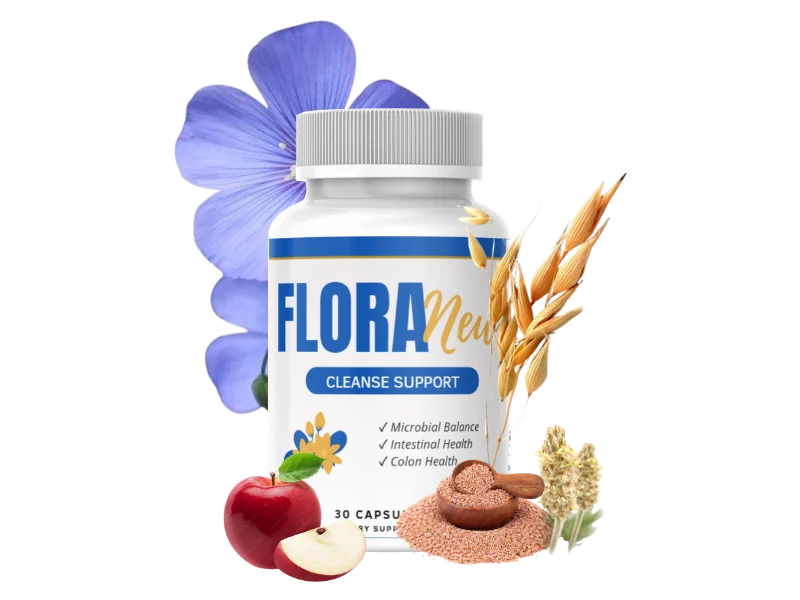
A once-daily, fibre-forward gut capsule
FloraNew is a delayed-release cleanse-support capsule built around soluble fibre. See the current official-store pricing and the 60-day guarantee before you decide.
Get OfferFrequently asked questions
What is a normal vaginal pH and why does it matter?
A healthy vaginal pH sits in a mildly acidic range of roughly 3.8 to 4.5. That acidity is created mainly by Lactobacillus bacteria, which produce lactic acid, and it makes the environment inhospitable to many unwanted microbes. When pH drifts higher, the balance can tip toward overgrowth of other organisms, which is why the number matters.
Can oral probiotics actually reach the vaginal microbiome?
There is evidence that certain oral strains can. Studies of Lactobacillus rhamnosus GR-1 and Lactobacillus reuteri RC-14 suggest the bacteria can survive digestion, travel through the gut and be detected in the vaginal tract. The effect is strain-specific, modest and not guaranteed for every product, so an oral capsule's relevance to the vaginal environment is best described as indirect.
Which Lactobacillus strains support vaginal pH balance?
The most studied are Lactobacillus rhamnosus GR-1 with Lactobacillus reuteri RC-14, and Lactobacillus crispatus, which dominates the most stable, acidic vaginal communities. Being studied is not the same as being proven for you, the benefit belongs to the named strain and dose, and none of these bacteria treat, cure or prevent any condition.
What everyday factors throw off vaginal pH?
Common disruptors include antibiotics, menstrual blood, semen, douching, some soaps, and the estrogen drop of menopause. Each can raise pH above the protective range and reduce Lactobacillus dominance. Supporting overall gut and dietary balance is a sensible background habit, but any persistent change in odour, discharge or comfort should be checked by a clinician.