Estrobolome: How Gut Bacteria Shape Your Estrogen
What is the estrobolome?
The estrobolome is the collection of gut bacterial genes that make beta-glucuronidase, an enzyme that reactivates estrogen the liver had packaged for disposal. Those reactivated estrogens are reabsorbed into circulation instead of leaving the body, so the mix of microbes in your gut helps set how much estrogen keeps recirculating.
- The enzyme: bacterial beta-glucuronidase frees estrogen for reabsorption.
- Diversity: a richer microbiome tracks with more balanced estrogen handling.
- Dysbiosis: an imbalanced gut can push circulating estrogen up or down.

A word coined to describe a real link
The term estrobolome was introduced in 2011 to name something researchers had been circling for years: the aggregate of microbial genes in the gut capable of metabolising estrogens. It is not an organ and not a single species. It is a functional collection — whichever bacteria in your intestine happen to carry the genes for the relevant enzymes, working together on the estrogen that passes through.
Why does estrogen pass through the gut at all? Because that is how the body disposes of it. Estrogen made in the ovaries, fat tissue and elsewhere circulates, does its work, and is then processed by the liver, which attaches a molecule that makes it water-soluble and marks it for excretion. A good deal of this deactivated estrogen leaves the liver in bile and enters the intestine on its way out of the body. And that is exactly where the microbiome gets a vote.
The enzyme at the centre: beta-glucuronidase
The liver's disposal tag is a glucuronic acid group; the process is called glucuronidation. Certain gut bacteria produce an enzyme, beta-glucuronidase, that snips that tag back off. Once de-conjugated, the estrogen is no longer marked for excretion — it is active again, and it can be reabsorbed through the intestinal wall back into the bloodstream. This loop, liver to gut and back, is the enterohepatic recirculation of estrogen.
The practical consequence is simple to state and important to grasp. When bacterial beta-glucuronidase activity is high, more estrogen is reactivated and reabsorbed, so less leaves the body. When that activity is low, more estrogen stays tagged and is excreted. The estrobolome, in other words, is a dial on how much of your own estrogen you recycle versus lose.
The liver decides how much estrogen to throw away. The gut microbiome gets to reconsider that decision on the way out.
Why microbial diversity keeps coming up
Human studies have repeatedly linked the richness and diversity of the gut microbiome with the pattern of estrogen and estrogen metabolites the body ends up with. In one well-cited analysis of postmenopausal women, greater microbial diversity was associated with a more favourable profile of estrogen metabolites in urine, alongside measurable differences in beta-glucuronidase activity. The relationship is correlational, not a lever you can yank, but it is consistent: a more diverse gut community tends to accompany more orderly estrogen handling.
Diversity matters here for the same reason it matters everywhere in the microbiome. A community with many members and many functions is harder to knock off balance, recovers faster from disturbances, and does not lean too heavily on any single enzyme-producing group. A thin, lopsided community is more prone to swings — including swings in the very enzyme that governs estrogen recirculation.
Dysbiosis can move estrogen in either direction
It is tempting to assume that an unhealthy gut always means "too little" or always means "too much" estrogen. The evidence does not support such a tidy rule. Dysbiosis — an imbalanced or depleted microbial community — can push circulating estrogen in either direction depending on what happens to beta-glucuronidase activity.
If dysbiosis raises that enzyme activity, more estrogen is de-conjugated and reabsorbed, and circulating levels of free estrogen can rise. If dysbiosis instead lowers it, more estrogen is excreted and less is recycled. This bidirectional behaviour is one reason researchers are cautious about turning the estrobolome into a marketing story. It is a regulatory system, not a one-way valve, and simplistic "detox your estrogen" claims usually ignore that the same disruption can produce opposite outcomes in different people.
It is worth being clear about scope. Scientists have examined the estrobolome in relation to a range of estrogen-related conditions, but that research is about associations and mechanisms, not about any supplement diagnosing, treating or preventing those conditions. This article is gut-hormone education. Anything to do with a specific health concern belongs with a clinician.
What menopause changes
Menopause reshapes this picture. Ovarian estrogen production falls sharply, so the body's dominant source of the hormone quiets down. At the same time, the gut microbiome tends to lose diversity with age. Put those together and the estrobolome's contribution becomes proportionally more noticeable: when the ovaries are producing less, the fraction of estrogen that gets recycled through the gut is a larger slice of a smaller pie.
This is also why the correlation between microbiome diversity and estrogen metabolism has been studied so often in postmenopausal women specifically. It is the life stage where the gut's handling of estrogen is least masked by strong ovarian output. None of this means a supplement can restore estrogen or reverse menopause — it cannot, and any product implying otherwise is overreaching. It simply means the gut-hormone relationship does not switch off at menopause; if anything, it becomes easier to see.
How to support a healthy estrobolome
The genuinely evidence-aligned steps are the unglamorous ones, and they are the same habits that support the microbiome in general:
| Lever | Why it plausibly helps |
|---|---|
| A wide range of plants and fibre | Feeds many microbial groups; fibre also binds estrogen and aids its excretion. |
| Fermented foods | Add and support lactic-acid bacteria and are associated with greater diversity. |
| Regular physical activity | Linked with higher microbial diversity independent of diet. |
| Avoiding unnecessary antibiotics | Antibiotics blunt diversity, the trait most consistently tied to balanced estrogen handling. |
Notice that fibre appears twice, and for two different reasons. It is the primary food for resident gut bacteria, and dietary fibre also increases the amount of deactivated estrogen carried out in stool rather than reabsorbed. That dual role is the most concrete, best-documented point of contact between everyday diet and estrogen metabolism.
Where FloraNew fits — and where it does not
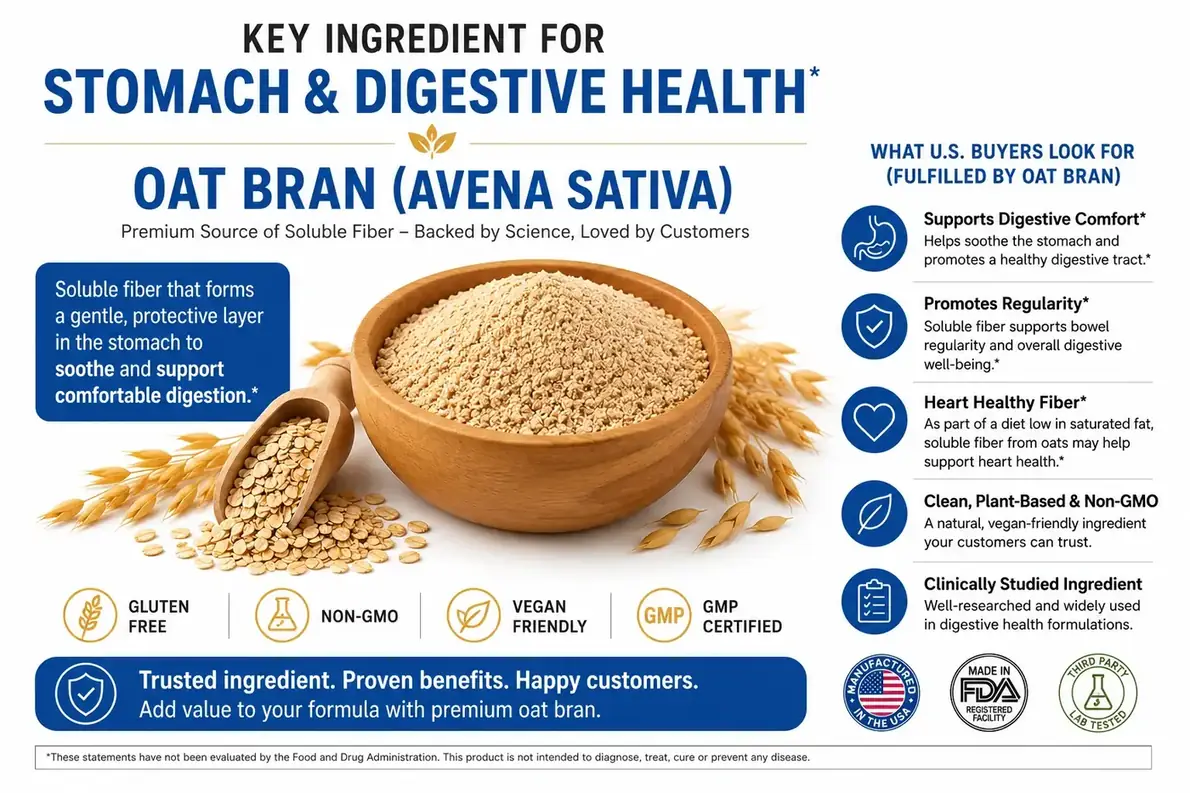
FloraNew is documented by its own ingredient sheets as a soluble-fibre product built around oat bran and apple pectin. Soluble fibre is exactly the kind of input the estrobolome depends on: it feeds resident microbes and helps move deactivated estrogen along and out. That is a fair, mechanism-level statement, and it is the honest ceiling of what a fibre capsule can claim in this context.
What FloraNew is not is an "estrogen supplement" or a hormone treatment. It contains no estrogen, it does not restore menopausal hormone levels, and no supplement can promise a particular estrogen result from adjusting the gut, because the estrobolome moves in both directions. If you want to understand the delivery and fibre-versus-probiotic side of the same product, see the related reading below.
The estrobolome also sits underneath three questions women usually ask separately but which share this same plumbing. Falling estrogen after the final period speeds bone turnover, and what the gut-bone axis research actually shows about probiotics and bone density is the most careful version of that literature. The same hormonal shift changes where fat is stored, which is the subject of probiotics, menopause belly fat and weight gain. And the years before menopause, when estrogen swings rather than falls, bring their own gut and mood changes — covered in probiotics in perimenopause.
Related reading
- Probiotics, menopause belly fat and weight gain
- Probiotics in perimenopause: mood and gut changes
- Prebiotic fibre vs probiotics: which one do you need?
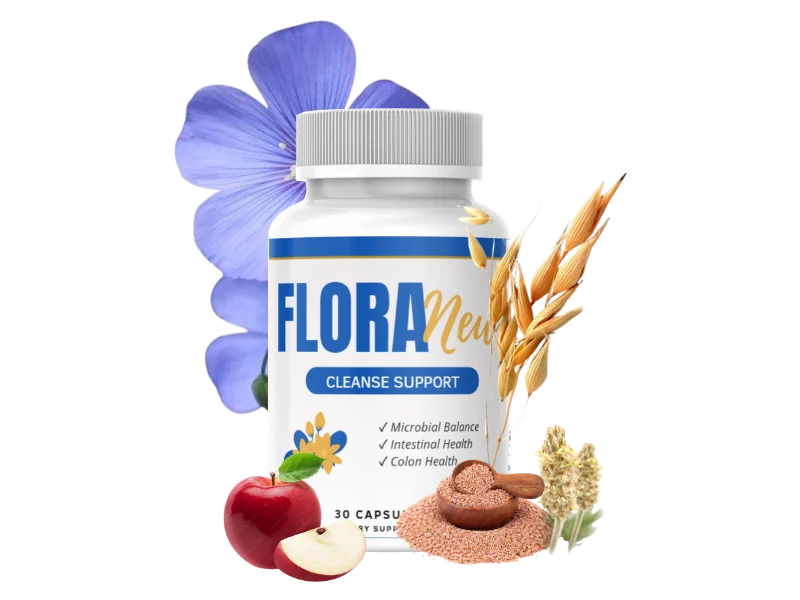
A once-daily fibre-forward capsule
FloraNew is a delayed-release cleanse-support capsule built around soluble fibre. Here is the current official-store pricing and the 60-day guarantee.
Get OfferFrequently asked questions
What is the estrobolome in simple terms?
In simple terms, the estrobolome is the set of gut bacteria and their genes that recycle estrogen. After the liver tags used estrogen for removal, certain microbes can un-tag it and send it back into your bloodstream. The makeup of those microbes helps decide how much estrogen you reabsorb versus excrete.
Can gut bacteria really affect estrogen levels?
Yes. Gut bacteria produce beta-glucuronidase, the enzyme that reactivates estrogen the liver had prepared for disposal. When this activity is high, more estrogen is reabsorbed; when it is low, more is excreted. Human studies link microbiome diversity with the pattern of estrogen metabolites the body ends up with.
Does the estrobolome change during menopause?
It appears to. Ovarian estrogen falls sharply at menopause, and gut diversity also tends to decline with age. Research finds that in postmenopausal women, the richness of the microbiome correlates with how estrogen is metabolised, so the estrobolome's relative influence on circulating estrogen may become more noticeable.
How can I support a healthy estrobolome?
The everyday levers are unglamorous: eat a wide range of plants and fibre, include fermented foods, stay active, and avoid unnecessary antibiotics. Fibre in particular binds estrogen in the gut and helps carry it out of the body. None of this is a treatment, but it supports the diversity the estrobolome depends on.