pH Balance Pills for Women: Do They Work?
Do pH balance pills actually work for women?
pH balance pills are really Lactobacillus probiotics, sometimes with vitamin C or prebiotics. They cannot instantly reset vaginal pH, but taken daily for four to eight weeks they may help rebuild the acid-producing flora that keeps a healthy vaginal pH of 3.8 to 4.5. Consistency, not a quick fix, is the point.
- What they are: Lactobacillus probiotics, often with vitamin C or prebiotic fibre — not a chemical "pH reset."
- Healthy range: a normal vaginal pH sits around 3.8–4.5, kept acidic by lactic acid from Lactobacillus.
- Timeline: think weeks of daily use, not hours; and skip douching, which pushes pH the wrong way.

Walk down any women's-health aisle, or scroll any feed, and you will meet the promise of a "pH reset" in a capsule — a pill that supposedly snaps your intimate chemistry back into place. It is an appealing idea, and it is also mostly marketing. The truth about pH balance pills for women is more modest and, once you understand it, far more useful: these are almost always Lactobacillus probiotics, they work slowly by rebuilding your own protective flora, and they cannot instantly re-acidify anything. This article explains what that means in practice, so you can spend on the version that has a chance of helping and skip the version that sells a fantasy.
What pH balance pills actually are
Start by decoding the name. When a product is marketed as a "pH balance pill," peel back the label and you will nearly always find the same core ingredient: live Lactobacillus bacteria, the genus that naturally dominates a healthy vaginal environment. Some formulas add vitamin C, which is mildly acidic and sometimes used vaginally, or prebiotic fibres meant to feed those bacteria. But the engine is the probiotic. There is no special "pH molecule" doing the work — the pill is trying to influence pH indirectly, by supporting the bacteria that produce acid, rather than by pouring acid in directly. That single reframing changes every expectation that follows.
Why does the mechanism matter so much? Because the way a product works dictates the timeline, the dose that matters, and the claims you should believe. A pill that supports acid-producing flora is a gardening project, not a light switch. And gardening projects are judged over weeks, not minutes. If you want the mechanism in full, our explainer on how probiotics support vaginal pH balance in women walks through the biology step by step.
What a "balanced" vaginal pH really means
Here is the piece most ads skip. In women of reproductive age, a healthy vaginal pH typically sits between about 3.8 and 4.5 — distinctly acidic, closer to tomato juice than to water. That acidity is not an accident; it is manufactured on purpose by Lactobacillus species, which ferment glycogen in the vaginal lining into lactic acid. The resulting low pH is a defensive feature: it makes the environment inhospitable to many of the organisms associated with imbalance, odour and infection. When people talk about "balance," this acidic, Lactobacillus-dominant state is what they mean, even if they have never seen the numbers.
So the goal of a genuine pH product is not to hit some arbitrary neutral point. It is to help maintain — or, after a disruption, help re-establish — that naturally acidic range by supporting the bacteria that create it. Anything promising to "neutralise" or "detox" your pH has the biology backwards; you do not want neutral, you want appropriately acidic.
You are not trying to make your pH neutral. A healthy vaginal environment is acidic on purpose — around 3.8 to 4.5 — and the pill's real job is to support the bacteria that keep it that way.
Why no pill can "instantly" reset your pH
This is the myth worth dismantling in plain language. Vaginal pH is the output of a living ecosystem. To shift it durably in the healthy direction, you have to shift the population of bacteria producing lactic acid — and populations of bacteria take time to establish, whether they arrive by oral capsule or vaginal suppository. A probiotic taken today does not colonise and re-acidify by tomorrow morning. Trials of vaginal probiotics are measured in weeks precisely because that is the biological clock involved.
That is also why "instant pH reset" language is a red flag rather than a feature. A product honest about its mechanism will talk about consistent daily use over a month or two. A product promising an overnight fix is either misunderstanding its own ingredient or hoping you will not ask. The realistic figure to hold in your head is four to eight weeks of daily use before you fairly judge whether a pH balance pill is doing anything for you.
Want a simple daily base for your flora?
FloraNew is a once-a-day, delayed-release fibre capsule built on soluble fibres such as oat bran and apple pectin — a low-drama way to feed the microbial community you already have. See the current official-store pricing and 60-day guarantee before you decide.
Get OfferWhat causes vaginal pH to drift out of range
Understanding what raises pH (makes it less acidic) tells you both why balance slips and why a pill is only part of the answer. The common culprits are predictable once you see the theme — anything that reduces Lactobacillus or floods the area with something less acidic can tip the number upward.
| Trigger | Effect on pH | Practical note |
|---|---|---|
| Menstrual blood | Temporarily raises pH (blood is near-neutral) | Usually self-corrects; a monthly, expected shift |
| Semen | Alkaline, briefly raises pH after intercourse | Normal and transient for most women |
| Antibiotics | Can reduce protective Lactobacillus | A common reason flora and pH wobble |
| Menopause | Lower oestrogen means less glycogen, less lactic acid | pH often rises with age; discuss options with a clinician |
| Douching & scented washes | Strip flora and disturb acidity | Work against balance — best avoided |
The douching line deserves emphasis because it is the most common self-inflicted mistake. Douching is marketed as "cleansing," but it flushes out the very Lactobacillus that keep pH low, and it can push the environment toward the alkaline range that non-protective bacteria prefer. No pH balance pill can out-run a daily douching habit. Stopping the thing that harms flora is often more valuable than adding a supplement on top.
How to read a pH balance pill label without getting fooled
Because these products are probiotics wearing a marketing costume, you judge them the way you judge any probiotic — on specifics, not adjectives. Three things belong on a label you can trust. First, named strains: not just "Lactobacillus," but the species and strain code (for vaginal health the best-studied names include L. rhamnosus GR-1, L. reuteri RC-14 and L. crispatus strains). Second, a real CFU count — the number of live organisms per serving, ideally guaranteed through the expiry date rather than only "at time of manufacture." Third, honesty about format and timeline. Vitamin C or prebiotic fibre can be reasonable add-ons, but they are supporting cast, not the headline.
If a "pH pill" gives you none of that — no strain code, no dated CFU, just a soft promise of "balance" — you cannot connect it to any of the research, and you are buying a story. This is the same discipline we apply across the category; our rundown of the best probiotics for vaginal health in 2026 lays out the full scoring rubric if you want to grade several bottles side by side.

Objection: “My symptoms clear up fast, so it must be working instantly”
Two honest cautions here. First, many minor vaginal changes fluctuate on their own, so a symptom easing the day after you start a pill is not proof the pill re-acidified anything — the biology simply does not move that fast. Second, and more important, if you have genuine symptoms — unusual discharge, a fishy or strong odour, itching, burning, or pain — that is a signal to see a clinician, not to self-diagnose with a home pH strip and a supplement. A rising pH can accompany conditions such as bacterial vaginosis that benefit from proper assessment. A pH balance pill is a maintenance and prevention idea for the calm periods, not a substitute for care when something is actually wrong.
A realistic four-to-eight-week routine
If you decide a pH-supporting probiotic is worth trying, set yourself up to actually see whether it helps. Choose a product with named strains and a dated CFU count, take it daily and consistently rather than only when you notice a problem, and give it a fair four-to-eight-week window before judging. Around that, protect the flora you are trying to grow: stop douching, drop scented intimate washes, favour breathable cotton, and be mindful that broad-spectrum antibiotics can knock flora back (a good reason to keep the probiotic going through and after a course). Prebiotic fibre in the diet feeds beneficial bacteria more broadly, which is the quiet base layer beneath the whole routine. None of this is dramatic, and that is the point — real pH support looks like patient upkeep, not a reset button.
Because pH and odour travel together, the question people actually type is usually about smell rather than about a number on a strip. We treat that separately in what probiotics can and cannot do about vaginal odour, which covers the same Lactobacillus mechanism from the symptom end.
Where FloraNew fits — and where it does not
To be straight about it: FloraNew is documented by its own published ingredient sheets as a soluble-fibre, cleanse-support capsule — the oat-bran and apple-pectin family — in a once-daily, delayed-release format. That makes it a prebiotic-leaning, fibre-first product whose honest role is to feed the microbial community you already have, not to act as a strain-specific vaginal pH pill. Its FAQ separately references a probiotic blend, but without a genus, species, strain code or dated CFU count — exactly the pattern this article tells you to treat as unverified rather than as evidence for GR-1, RC-14 or crispatus specifically. Read honestly, FloraNew makes no vaginal-pH claim we would repeat, and this page is not one. Where it earns a fair look is as a simple, low-drama daily fibre capsule; if your specific goal is vaginal pH, buy on named strains and dated CFU, and see a clinician for persistent symptoms.
Related reading
- Probiotics and vaginal pH balance for women
- Probiotics for vaginal odor: what works
- Vaginal probiotics: how they actually work
- Best probiotics for vaginal health in 2026
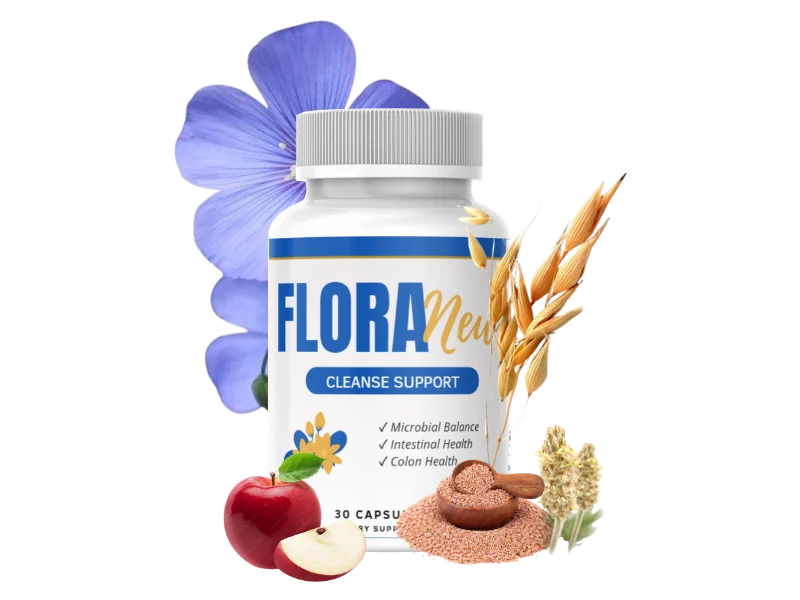
See the capsule in context
FloraNew is a once-a-day, delayed-release fibre capsule with a documented soluble-fibre base. Here is the current official-store pricing and the 60-day guarantee, so you can judge the product on exactly what it is.
Get OfferFrequently asked questions
Do pH balance pills actually work?
It depends on what you expect. There is no pill that chemically resets vaginal pH on demand. What is sold as pH balance pills are usually Lactobacillus probiotics, and some strains have been studied for helping restore the acid-producing flora that keeps vaginal pH in a healthy range. Taken consistently they may help; used as an instant fix they will not.
What is a normal vaginal pH?
In women of reproductive age, a healthy vaginal pH usually sits between about 3.8 and 4.5, which is mildly acidic. That acidity is produced mainly by Lactobacillus bacteria making lactic acid, and it helps keep less welcome organisms in check. pH tends to rise, meaning it becomes less acidic, around menstruation, after menopause, and when protective flora is disrupted.
How long do pH balance pills take to work?
Not overnight. Rebuilding a protective, Lactobacillus-dominant environment is a gradual process, and studies of vaginal probiotics generally run over weeks. A realistic expectation is consistent daily use for around four to eight weeks before judging any effect, alongside avoiding the douching and harsh washes that work against you.
What causes vaginal pH to rise?
Several things can push vaginal pH above the healthy acidic range: menstrual blood, semen, antibiotics that reduce Lactobacillus, hormonal changes around menopause, and douching or scented washes. A rising pH can allow non-protective bacteria to take hold, which is why persistent changes, unusual discharge or odour deserve a clinician's assessment rather than guesswork.