Probiotics for Vaginal Odor: What Works
Can probiotics help with vaginal odor?
Unusual vaginal odor often reflects a pH imbalance and a loss of protective Lactobacillus, the pattern behind bacterial vaginosis. Certain probiotic strains, such as L. rhamnosus and L. reuteri, have been studied for helping restore that protective flora over weeks. A strong, fishy odor, though, warrants a clinician visit first.
- Root cause: odor usually tracks pH and flora, not "poor hygiene" — over-washing often makes it worse.
- Studied strains: L. rhamnosus and L. reuteri are the names most linked to restoring protective flora.
- Timeline & safety: expect weeks, not hours; see a clinician for a persistent fishy odor to rule out infection.
Let's talk about something a lot of women worry about privately and almost never say out loud. If you have noticed a change in vaginal odor, the first thing to know is that you are not "dirty," and scrubbing harder is not the answer. Odor is a signal from an ecosystem, and the most useful response is to understand what that ecosystem is telling you. This is where the interest in probiotics for vaginal odor comes from — not as a perfume, but as a way to support the protective bacteria that keep the environment healthy. This guide is honest about what that can and cannot do, and about when a change in odor is a reason to call a clinician instead.
First, let's be honest about odor
Every healthy vagina has a scent, and it changes across the cycle, after exercise, after sex and with your diet. A mild, musky or slightly tangy smell is normal and not a problem to be solved. What is worth paying attention to is a change from your own baseline — particularly a strong, fishy or foul odor, especially when it comes with unusual discharge, itching or irritation. That combination often points to a shift in the vaginal environment rather than anything to do with cleanliness, and no amount of washing will fix an underlying imbalance. Naming this plainly matters, because shame drives women toward exactly the scented products that make the situation worse.
How probiotics for vaginal odor are supposed to work
To understand the probiotic angle, you have to understand the usual cause of a persistent, unusual smell. A healthy vaginal environment is dominated by Lactobacillus bacteria, which produce lactic acid and keep the pH in a mildly acidic range of roughly 3.8 to 4.5. That acidity holds other organisms in check. When Lactobacillus decline and pH rises, other bacteria can flourish — the picture behind bacterial vaginosis (BV), which is strongly associated with that characteristic fishy odor. In other words, the smell is usually downstream of a flora-and-pH problem.
The probiotic idea follows directly: if low Lactobacillus and high pH are the setting for odor, then supporting those protective bacteria might help the environment return toward normal, and the odor with it. It is a mechanistically sensible hypothesis, and it explains why probiotics are talked about as a support and prevention tool rather than a deodorant. If you want the underlying chemistry in more depth, our piece on how probiotics support vaginal pH balance in women lays out the acid-producing mechanism in full.
Odor is usually a symptom of a shifted ecosystem, not a hygiene failure. That is why the honest goal is to support the bacteria that keep pH low — not to mask a smell.
The strains that actually have research behind them
This is where careful shopping separates a product with a chance of helping from a scented gimmick. Probiotic effects are strain-specific: a result for one named strain does not transfer to a different strain, let alone to the whole genus. The names that recur in vaginal-flora research are specific, coded organisms — most prominently Lactobacillus rhamnosus GR-1 and Lactobacillus reuteri RC-14, which have been studied together for supporting a Lactobacillus-dominant environment, with additional interest in L. crispatus strains. Small studies have looked at these alongside standard care in women with BV-type imbalance, with encouraging but not definitive results.
The practical rule is the same label test that runs through this whole category. A product worth considering names the genus, the species, the strain code and a real CFU count, ideally guaranteed to expiry. A bottle that says only "feminine probiotic blend" has given you none of those and cannot be matched to any study. For the closely related question of what the trials show in a diagnosed condition, our review of probiotics for bacterial vaginosis and the evidence in women is the honest companion to this page.
Prefer a simple daily fibre base?
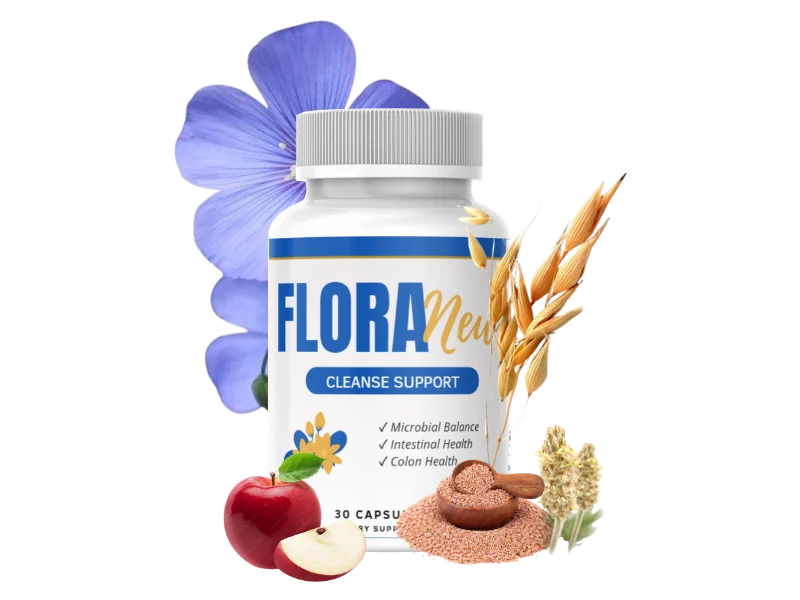
FloraNew is a once-a-day, delayed-release capsule built on soluble fibres such as oat bran and apple pectin — a low-drama way to feed the microbial community you already have. See the current official-store pricing and 60-day guarantee, then judge it on what it is.
Get OfferWhy washing more can make odor worse
Here is the myth that causes the most harm, and it deserves blunt correction. The instinct when you notice odor is to clean more aggressively — scented washes, wipes, "feminine deodorants," and in the worst case douching. Every one of those works against you. The vagina is self-cleaning, and its defence is the acidic, Lactobacillus-rich environment we have been describing. Douching literally flushes those protective bacteria out and can raise pH, which is the opposite of what you want; it is associated with a higher, not lower, risk of the imbalance behind odor. Scented products add fragrance over a biological problem while irritating the tissue. The kind, effective move is counterintuitive: be gentler, not harsher. Warm water on the external area is enough; leave the internal ecosystem alone to do its job.
What the timeline really looks like
Set expectations honestly and you will make a better decision. Probiotics are not a same-day fix for odor, because changing a smell means changing a bacterial population, and populations take time to shift. Studies of vaginal probiotics are measured in weeks, so a fair trial is consistent daily use over several weeks, not a verdict after two days.
| What you might notice | Likely picture | Sensible next step |
|---|---|---|
| Mild, musky, changes with cycle | Normal variation | Nothing needed; gentle external washing only |
| New odor after sex or a period | Temporary pH shift (semen, blood) | Often self-corrects; watch your own baseline |
| Persistent strong or fishy odor | Possible BV-type imbalance | See a clinician; probiotics are support, not treatment |
| Odor with itching, burning, unusual discharge | Possible infection | Get assessed before trying supplements |
Read that table as a triage tool, not a diagnosis. Its main job is to help you tell the difference between the normal fluctuations that need nothing and the persistent changes that deserve a clinician's eyes.
When odor is a reason to see a clinician
This is the most important paragraph on the page, so it is deliberately unambiguous. A strong, fishy or foul odor — especially with unusual discharge, itching, burning or pain, or after possible exposure to a sexually transmitted infection — is a reason to see a clinician, not a reason to reach for a supplement. Bacterial vaginosis and several infections that can cause odor are readily assessed and treated, and treating them promptly matters, particularly in pregnancy. Probiotics live on the support-and-prevention side of the line; they do not diagnose anything and they are not a substitute for care. Using them to postpone a visit is the wrong trade, full stop.
Building a gentle, flora-first routine
If your situation is the everyday, non-urgent kind — you want to support a healthy environment and reduce the odds of imbalance — a calm, flora-first routine is the most defensible approach. Start by removing the things that harm flora: stop douching, drop scented intimate washes and deodorants, and favour breathable cotton underwear. Then support the beneficial bacteria: a probiotic with named strains such as GR-1 and RC-14, taken daily and consistently for several weeks, plus prebiotic fibre in your diet to feed beneficial bacteria more broadly. Keep the probiotic going through and after any course of antibiotics, since those can knock protective flora back. For the fuller playbook on choosing a product, our guide to the best probiotics for vaginal health in 2026 gives you the scoring criteria to compare bottles fairly. None of this is dramatic — and durable balance rarely is.

Where FloraNew fits — and where it does not
To be straight about it: FloraNew is documented by its own published ingredient sheets as a soluble-fibre, cleanse-support capsule — the oat-bran and apple-pectin family — in a once-daily, delayed-release format. That makes it a prebiotic-leaning, fibre-first product whose honest role is to feed the microbial community you already have, not a strain-specific vaginal probiotic aimed at odor. Its FAQ separately references a probiotic blend, but without a genus, species, strain code or dated CFU count — exactly the pattern this article tells you to treat as unverified rather than as evidence for GR-1, RC-14 or crispatus specifically. Read honestly, FloraNew makes no vaginal-odor claim we would repeat, and this page is not one. Where it earns a fair look is as a simple, low-drama daily fibre capsule; if your goal is odor tied to vaginal flora, choose a named-strain probiotic, be gentle with washing, and see a clinician for anything strong or persistent.
Related reading
- Probiotics and vaginal pH balance for women
- pH balance pills for women: do they work?
- Probiotics for bacterial vaginosis: what the evidence shows
- Vaginal probiotics: how they actually work

See the capsule in context
FloraNew is a once-a-day, delayed-release fibre capsule with a documented soluble-fibre base. Here is the current official-store pricing and the 60-day guarantee, so you can judge the product on exactly what it is.
Get OfferFrequently asked questions
Can probiotics help with vaginal odor?
They may, indirectly. Unusual odor is usually a sign that vaginal pH has risen and protective Lactobacillus have declined, the pattern seen in bacterial vaginosis. Some probiotic strains have been studied for helping restore that protective flora, which can support a normal environment over time. Probiotics are a support and prevention idea, not a treatment for a diagnosed infection.
Which probiotic strains reduce feminine odor?
The strains with the most research behind them for vaginal flora are Lactobacillus rhamnosus GR-1 and Lactobacillus reuteri RC-14, with some evidence for L. crispatus strains. Effects are strain-specific, so a product that only says Lactobacillus with no strain code and no CFU count cannot be matched to these studies. Choose named strains.
How long until probiotics improve odor?
Not in hours. Rebuilding protective flora is gradual, and studies of vaginal probiotics run over weeks. A realistic expectation is consistent daily use for several weeks before judging any change, alongside dropping the scented washes and douching that make imbalance worse. If odor is strong or persistent, see a clinician rather than waiting.
When should I see a doctor about vaginal odor?
See a clinician if you notice a strong or fishy odor, unusual discharge, itching, burning, pain, or odor after possible exposure to a sexually transmitted infection. These can signal bacterial vaginosis or another infection that benefits from proper assessment and treatment. Probiotics do not replace that care, and delaying it to try a supplement is the wrong trade.