Probiotics for UTI Prevention in Women: What the Evidence Says
Can probiotics prevent recurrent UTIs in women?
Some vaginal Lactobacillus strains have been studied for lowering the risk that urinary tract infections come back in women who get them repeatedly, and early results look promising. The evidence is not yet definitive, strains differ from each other, and probiotics belong to the prevention conversation, not to the treatment of an infection you already have.
- Higher risk: women get UTIs far more often than men, largely because of anatomy.
- Studied strains: mostly vaginal Lactobacillus, such as L. rhamnosus GR-1 and L. reuteri RC-14.
- Not a treatment: an active UTI needs a clinician, not a supplement.
Why UTIs are so much more common in women
The starting fact behind this whole topic is unequal biology. Women experience urinary tract infections many times more often than men, and a large share of women will have at least one in their lifetime. The main reason is anatomical: a shorter urethra sitting close to the vaginal and rectal openings gives gut and skin bacteria a shorter trip to the bladder. Hormonal shifts around menstruation, pregnancy and menopause change the vaginal environment as well, which is where the microbiome part of the story begins.
For many women the problem is not a single infection but recurrence — the same pattern returning several times a year. That recurring pattern is what has driven researchers to look past same-day treatment and ask whether the ecosystem of the vagina itself can be nudged to make recurrence less likely. That is a prevention question, and it is the honest frame for everything below.
The microbiome logic behind the probiotic idea
A healthy vaginal environment in women of reproductive age is usually dominated by Lactobacillus species. These bacteria produce lactic acid, which keeps the local pH low and acidic, and some produce hydrogen peroxide and other compounds that make it harder for unwelcome organisms to establish. When that Lactobacillus dominance is disrupted — by antibiotics, hormonal change, or other factors — the environment becomes more hospitable to the bacteria that can travel to the bladder.
The probiotic hypothesis follows directly from that observation: if low Lactobacillus is linked to more infections, then restoring or reinforcing those protective strains might reduce how often infections come back. It is a plausible, mechanistically sensible idea. Plausible is not the same as proven, and the gap between the two is exactly where careful reading matters.
Which strains the research actually points to
This is where most supplement shopping goes wrong. Probiotic effects are strain-specific: a result for one named strain does not transfer to a different strain of the same species, and certainly not to the genus Lactobacillus as a whole. The strains that recur in the UTI and vaginal-health literature are specific, coded organisms — most prominently Lactobacillus rhamnosus GR-1 and Lactobacillus reuteri RC-14, which have been studied together for supporting vaginal flora. Other vaginal Lactobacillus strains appear in smaller studies too.
The practical takeaway is a label test. A product that hopes to lean on this research should name the genus, the species, the strain code and the colony-forming units per serving. A bottle that says only “Lactobacillus blend for women” has given you none of those, and there is no way to connect it to any of the trials. No strain code, no claim.
“Contains Lactobacillus” tells you about as much as “contains protein”. The evidence, if there is any, lives at the strain level two steps further down.
What the trials show, and where they stop
Several small randomised trials and systematic reviews have examined vaginal or oral Lactobacillus for reducing recurrent UTIs, particularly in women with a history of frequent infections. The overall signal has been encouraging: some studies report fewer recurrences in the probiotic groups, and safety has generally looked good. Reviewers, however, keep landing on the same three caveats — the studies are often small, the strains and doses vary from one trial to the next, and the methods are not consistent enough to pool cleanly.
That is why bodies that summarise this evidence describe it as promising but not definitive. It is reasonable to read the research as “there may be something here for prevention in women who recur, with specific strains”. It is not reasonable to read it as “probiotics prevent UTIs” full stop. Holding both of those at once is the honest position.
Delivery route: oral versus vaginal
One nuance that gets lost on supplement shelves is how the bacteria are supposed to reach the place they are meant to act. Some of the strain research uses vaginal delivery so the organisms arrive where the protective flora lives. Other work uses oral capsules on the reasoning that some strains can transit and reach the vaginal area from the gut. These are genuinely different delivery questions, and a claim borrowed from a vaginal-delivery study does not automatically apply to an oral capsule of the same strain. It is one more reason to match the product to the study rather than to the marketing.
Cranberry versus probiotics: a fairer comparison
People often frame this as a contest, but the two work on different proposed mechanisms, so it is more of a comparison than a competition.
| Approach | Proposed mechanism | How to read the evidence |
|---|---|---|
| Cranberry (proanthocyanidins) | May reduce bacterial adhesion to the bladder wall | Mixed but some supportive prevention data; dose and PAC content matter |
| Probiotics (vaginal Lactobacillus) | May support protective, acid-producing flora | Promising, strain-specific, not yet definitive |
| Hydration and habits | More frequent flushing of the tract | Simple, low-risk, supported for some women |
| Any active infection | Requires medical assessment | See a clinician; do not self-treat |
For a woman weighing options, the sensible reading is that cranberry and probiotics are both reasonable prevention avenues to discuss with a clinician, chosen on the basis of named, dose-specified products, and that neither one is a reason to skip proper care when an infection is actually present. The cranberry side turns entirely on standardised proanthocyanidin content rather than on juice, which is unpacked in what a cranberry supplement has to disclose before it can say anything about recurrence. The other ingredient women are usually offered alongside it is a simple sugar, and whether D-mannose really works for UTIs reviews those trials on the same terms. Products that combine all three into one bottle are worth reading carefully, and what a URO probiotic label actually tells you shows how.
What probiotics cannot do
The single most important line in this article is this one: none of the prevention research turns a probiotic into a treatment. If you have burning, urgency, frequency, cloudy urine or any sign of an active infection, that is a reason to contact a clinician, not to reach for a capsule. Untreated urinary infections can progress, and delaying care to try a supplement is the wrong trade. Probiotics live entirely on the prevention side of the fence, and even there the claim is “may reduce risk”, not “will”.
Where FloraNew sits in all this
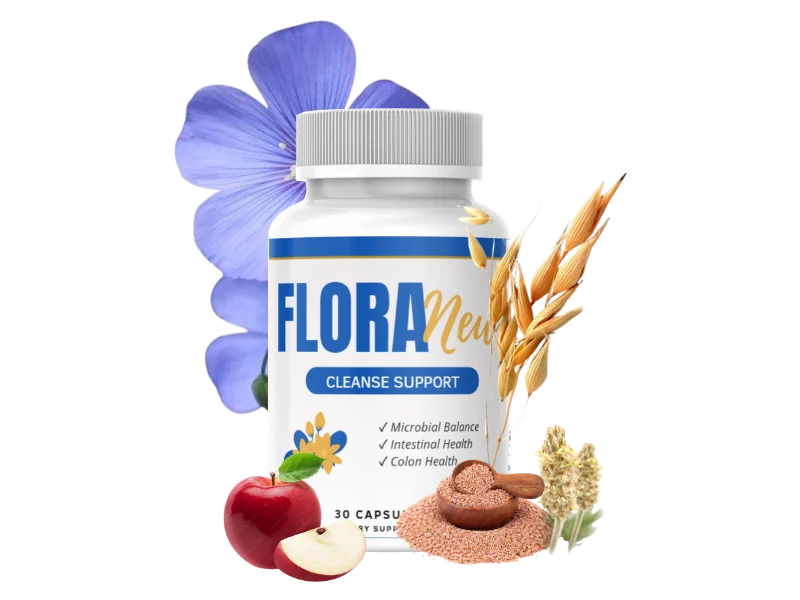
To be straight about it: FloraNew is documented by its own ingredient sheets as a soluble-fibre cleanse-support capsule — the oat-bran and apple-pectin family — which is a gut product, not a vaginal-flora product. Its FAQ separately mentions a probiotic blend, but without a genus, a species, a strain code or a CFU count, which is exactly the label pattern this article says cannot be matched to the UTI research. Read honestly, FloraNew is not a urinary-tract product and makes no UTI claim, and nothing here should be taken as one. If the flora side of women's health is your real question, the more useful reading is on vaginal pH and on which strains have actually been studied.
Related reading
- Probiotics and vaginal pH balance for women
- The best-studied probiotic strains for women's health in 2026
- Yeast infections and probiotics: do they actually help?
See the capsule in context
FloraNew is a once-a-day delayed-release fibre capsule. Here is the current official-store pricing and the 60-day guarantee, so you can judge the product on what it actually is.
Get OfferFrequently asked questions
Can probiotics prevent recurrent UTIs?
Some vaginal Lactobacillus strains have been studied for reducing how often UTIs recur in women who get them repeatedly, and several small trials report fewer episodes. The evidence is promising rather than definitive, results vary by strain, and probiotics are best framed as a prevention research topic, not a guarantee.
Which probiotic strains help with UTIs?
Most of the research points to specific vaginal Lactobacillus strains, in particular Lactobacillus rhamnosus GR-1 and Lactobacillus reuteri RC-14. Effects are strain-specific, so a bottle that only says Lactobacillus with no strain code and no CFU count cannot be matched to any of these studies.
Do probiotics treat an active UTI?
No. An active urinary tract infection is a medical issue that a clinician should assess, and it is usually managed with prescribed treatment. Probiotics are studied for prevention and for supporting normal flora, not as a way to clear an infection you already have. Do not delay care.
Is cranberry or probiotics better for UTIs?
They are studied for different mechanisms, so it is not a clean contest. Cranberry proanthocyanidins are thought to reduce bacterial adhesion, while probiotics aim to support protective vaginal flora. Both have mixed but promising prevention evidence, and neither replaces medical care for an active infection.